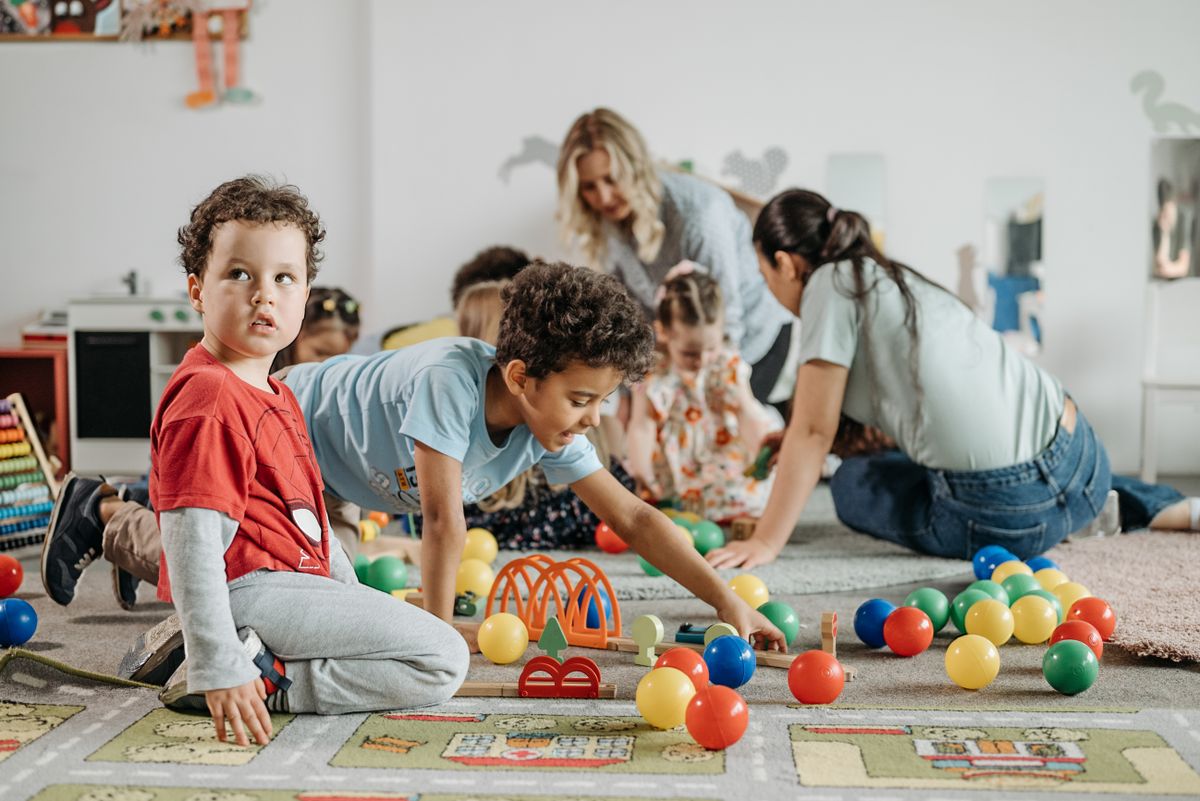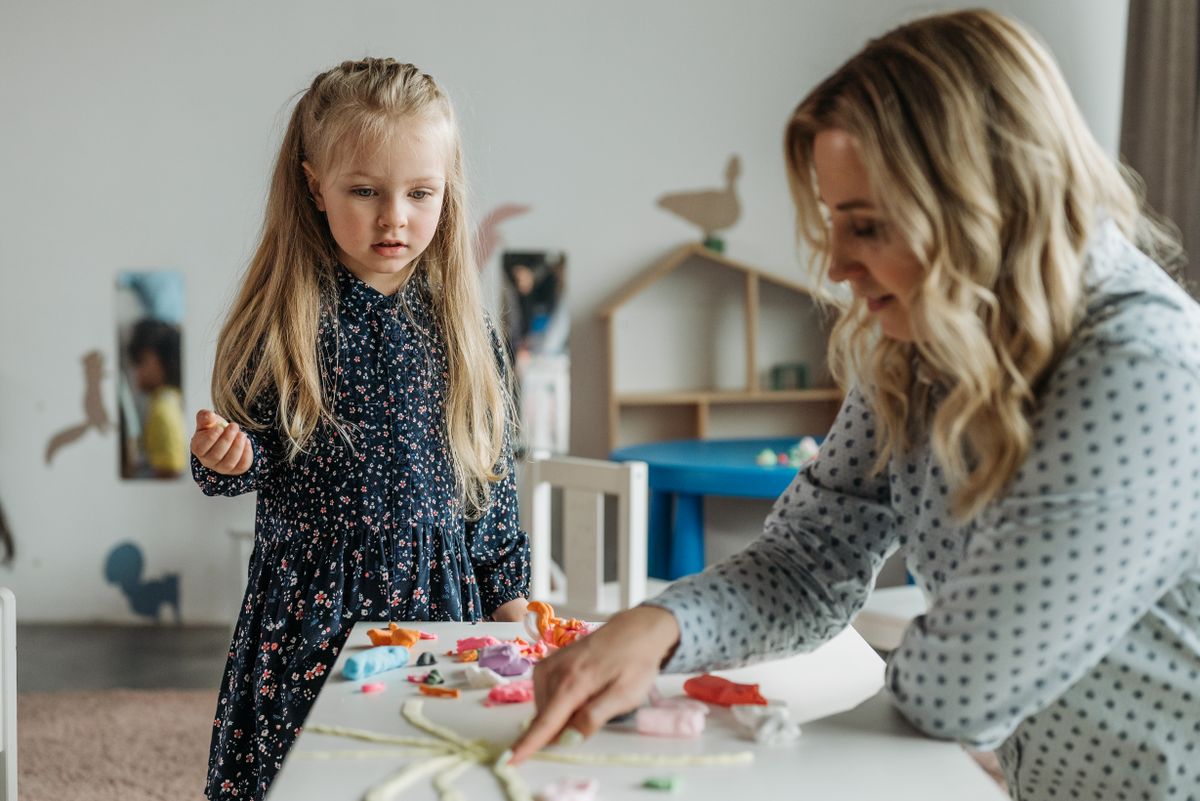
Paint on hands, sand in shoes, dough under nails. To an adult it looks like chaos — to a developing brain, it's a full workout. Here's why our teachers protect messy time every single day.
Hands build brains
Squeezing, pouring, and smearing strengthen the small muscles needed for writing — while giving the brain rich feedback about texture, weight, and cause and effect. A child who spends twenty minutes at the water table is practicing physics.
Feelings need outlets
Pounding dough after a frustrating morning isn't misbehavior; it's regulation. Sensory materials give big emotions somewhere safe to go, which is why calm-down corners in our rooms always include something to squeeze.
Language grows in the mess
"Squishy," "slippery," "more water!" — sensory play produces floods of descriptive words. Teachers narrate alongside children, turning every texture tray into a vocabulary lesson. Our Sensory Play program is built entirely on this idea.
Try it at home: a tray, some dry pasta, cups, and spoons. Sit nearby, describe what you see, and resist tidying for fifteen minutes. The learning is in the mess.